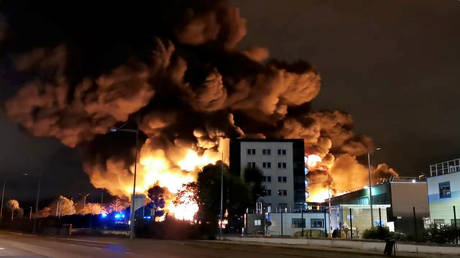
Residents in Plancoet, in northwestern France, were rudely awoken in the middle of the night by a series of ferocious explosions at a nearby supermarket, which blew out windows and forced evacuations.
Roughly 40 firefighters from the town and nearby villages were deployed to tackle the blaze near the Hyper U store in Plancoet, which broke out at around 2:38am local time. Eyewitness footage from the scene shows the incredible power of the explosions. It comes amid fears that an arsonist might be wreaking havoc in the area.
Exploded gas bottles were found over 50 meters away from the fire, and there is also a liquefied petroleum gas tank nearby which firefighters were extremely concerned might explode during the initial phase of their operation.
Hampering their efforts further was the risk of additional gas cylinders exploding and becoming improvised missiles, forcing firefighters to keep their distance and rely on water cannon to tame the blaze.
Some 55 people were evacuated, while a further five were ordered to shelter in place in their homes, but thankfully there were no injuries or fatalities reported.
https://ift.tt/38hSRUC
Thursday morning’s fire is the largest of 15 blazes to occur in the town in the last three months. Mayor Patrick Barrault declined to comment on the possibility that a serial arsonist was to blame for the recent spate of fires, citing an ongoing investigation.
Cuba will begin easing its pandemic lockdown in Havana on Friday, while most of the rest of the country will move to phase two of a three-phase process towards normalization.
The capital’s 2.2 million residents will be able to move around on public and private transport, go to the beach and other recreation centers, and enjoy a seaside drive just in time for the summer break.
Residents can also dine out and have a drink, although social distancing and wearing masks remain mandatory. Optional medical and other services will also resume.
Only a handful of coronavirus cases were reported in Cuba last month, all but a few in Havana. Most of the Caribbean island, home to 11.2 million inhabitants, has been free of the disease for more than a month, Reuters reports. Phase three broadens international travel depending on risk.
Beijing has warned that it won’t stand back and watch the UK grant citizenship to millions of Hong Kongers. If China’s opposition to the move isn’t heard, some “corresponding measures” will come into play.
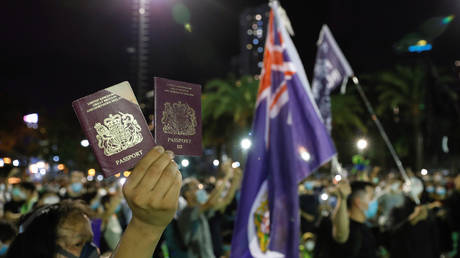
PM Boris Johnson said earlier on Wednesday that if China pursues hotly-debated national security laws in Hong Kong, millions of its residents will be eligible for the British National Overseas (BNO) passport.
The passport currently allows holders to enter the UK without a visa for six months, but British immigration laws could be changed in such a way that overseas nationals would be able to stay in the UK for a renewable period of 12 months – and become British citizens in the future.
On Thursday, Chinese diplomats hit back at the PM’s promise, saying it was an affront to its sovereignty and a breach of London’s own agreements with Beijing. The UK had once declared that “it will not confer the right of abode to Chinese citizens in Hong Kong who hold BNO passports,” China’s Embassy in London recalled.
If Hong Kongers are allowed to emigrate en masse, it would breach the UK’s “own position and pledges as well as international law and basic norms governing international relations,” it added.
We firmly oppose this and reserve the right to take corresponding measures.
Ambassador Liu Xiaoming noted that nothing in the joint Sino-British declaration returning Hong Kong to China gives the UK “sovereignty, jurisdiction or right of supervision” over the former colony.
Echoing countless statements by Chinese officials, he said Hong Kong affairs fall within China’s jurisdiction and “brook no external interference.”
“Gone are the days when Hong Kong was under British colonial rule,” he tweeted.
Meanwhile, Foreign Secretary Dominic Raab acknowledged that there’s little the UK can do “to force China to allow BNOs to come to the UK.” Still, London will use “diplomatic leverage” to persuade Beijing against enacting the Hong Kong security laws.
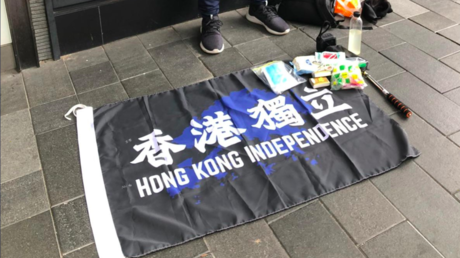
As the diplomatic spat unfolded, thousands of Hong Kong residents took to the streets on the anniversary of the 1997 handover from Britain to China to decry the legislation which came into force on Tuesday night. The protests saw clashes with police who used water cannon, tear gas, and pepper spray against the crowds.
The protestors believe the legislation – which outlaws secession, terrorism, and collusion with foreign forces – will silence dissent and spell the end of Hong Kong’s special autonomous status. Beijing insists that it’s only looking to boost security and ensure stability in the region; and it has consistently demanded that nations backing pro-independence protests stop meddling in China’s internal affairs.
Mexican first lady Beatriz Gutierrez has issued an apology and locked her Twitter account after her remarks about children suffering from cancer were slammed as insensitive and dismissive.
Gutierrez posted a tweet marking the two-year anniversary of President Andres Manuel Lopez Obrador’s electoral victory – but her celebratory mood was quickly dampened by a flood of questions and criticism directed at her husband.
“When will you personally attend to the parents of children with cancer? Thank you for your kind response,” read one reply.
Seemingly unmoved by the query, the first lady fired back: “I’m not a doctor, maybe you are. On you go, you help them.”
— Sergio Sarmiento (@SergioSarmiento) July 1, 2020
Her response was not well received, with anger over her comments quickly spreading across social media.
Outraged Mexicans launched the hashtag #LaBrujaDelPalacio (The Witch of the Palace), and Gutierrez’s name became a trending topic in the country.
Parents of children with cancer in the country demanded an apology from the first lady, and called for more “empathetic and humane” dialogue on issues concerning public health. Gutierrez’s husband faced criticism earlier this year after reports emerged detailing a shortage of medicines used for treating children with cancer.
The offending tweet was later deleted and Gutierrez issued an apology in which she took aim at her husband’s “inquisitive adversaries,” but stressed that she is “deeply human” and “wishes the best for everyone.” The backpedaling was perhaps too little too late, as the first lady ultimately chose to set her Twitter account to private.
The social media scandal comes just days after President Obrador claimed that Twitter was overrun with bots that were spreading fake news about his administration.
Beijing has warned that it won’t stand back and watch the UK grant citizenship to millions of Hong Kongers. If China’s opposition to the move isn’t heard, some “corresponding measures” will come into play.
PM Boris Johnson said earlier on Wednesday that if China pursues hotly-debated national security laws in Hong Kong, millions of its residents will be eligible for the British National Overseas (BNO) passport.
The passport currently allows holders to enter the UK without a visa for six months, but British immigration laws could be changed in such a way that overseas nationals would be able to stay in the UK for a renewable period of 12 months – and become British citizens in the future.
On Thursday, Chinese diplomats hit back at the PM’s promise, saying it was an affront to its sovereignty and a breach of London’s own agreements with Beijing. The UK had once declared that “it will not confer the right of abode to Chinese citizens in Hong Kong who hold BNO passports,” China’s Embassy in London recalled.
If Hong Kongers are allowed to emigrate en masse, it would breach the UK’s “own position and pledges as well as international law and basic norms governing international relations,” it added.
We firmly oppose this and reserve the right to take corresponding measures.
Ambassador Liu Xiaoming noted that nothing in the joint Sino-British declaration returning Hong Kong to China gives the UK “sovereignty, jurisdiction or right of supervision” over the former colony.
Echoing countless statements by Chinese officials, he said Hong Kong affairs fall within China’s jurisdiction and “brook no external interference.”
“Gone are the days when Hong Kong was under British colonial rule,” he tweeted.
Meanwhile, Foreign Secretary Dominic Raab acknowledged that there’s little the UK can do “to force China to allow BNOs to come to the UK.” Still, London will use “diplomatic leverage” to persuade Beijing against enacting the Hong Kong security laws.
As the diplomatic spat unfolded, thousands of Hong Kong residents took to the streets on the anniversary of the 1997 handover from Britain to China to decry the legislation which came into force on Tuesday night. The protests saw clashes with police who used water cannon, tear gas, and pepper spray against the crowds.
The protestors believe the legislation – which outlaws secession, terrorism, and collusion with foreign forces – will silence dissent and spell the end of Hong Kong’s special autonomous status. Beijing insists that it’s only looking to boost security and ensure stability in the region; and it has consistently demanded that nations backing pro-independence protests stop meddling in China’s internal affairs.
Mexican first lady Beatriz Gutierrez has issued an apology and locked her Twitter account after her remarks about children suffering from cancer were slammed as insensitive and dismissive.
Gutierrez posted a tweet marking the two-year anniversary of President Andres Manuel Lopez Obrador’s electoral victory – but her celebratory mood was quickly dampened by a flood of questions and criticism directed at her husband.
“When will you personally attend to the parents of children with cancer? Thank you for your kind response,” read one reply.
Seemingly unmoved by the query, the first lady fired back: “I’m not a doctor, maybe you are. On you go, you help them.”
— Sergio Sarmiento (@SergioSarmiento) July 1, 2020
Her response was not well received, with anger over her comments quickly spreading across social media.
Outraged Mexicans launched the hashtag #LaBrujaDelPalacio (The Witch of the Palace), and Gutierrez’s name became a trending topic in the country.
Parents of children with cancer in the country demanded an apology from the first lady, and called for more “empathetic and humane” dialogue on issues concerning public health. Gutierrez’s husband faced criticism earlier this year after reports emerged detailing a shortage of medicines used for treating children with cancer.
The offending tweet was later deleted and Gutierrez issued an apology in which she took aim at her husband’s “inquisitive adversaries,” but stressed that she is “deeply human” and “wishes the best for everyone.” The backpedaling was perhaps too little too late, as the first lady ultimately chose to set her Twitter account to private.
The social media scandal comes just days after President Obrador claimed that Twitter was overrun with bots that were spreading fake news about his administration.
The bodies of some 113 people have been recovered from the rubble following a landslide near a jade mine in Myanmar, the country’s Fire Service Department has confirmed.
Heavy monsoon rains created a “muddy wave” which trapped workers and scavengers at the site at roughly 8am local time on Thursday in the jade-rich Hpakant area in the northern Kachin state.
“The jade miners were smothered by a wave of mud, which hit after heavy rainfall,” the national fire service said.
https://ift.tt/3igXlPX https://ift.tt/3eSq5ML
Landslides at the poorly regulated mines of Hpakant are common, with some 116 people dying in a similar incident in the area in 2015.
Myanmar is the world’s biggest source of jade, and hundreds of people frequent the exterior of the mines to look for fallen stones and to sift through discarded rubble from mine trucks in search of jade stones. The country’s jade trade is estimated to be worth over $30 billion per year.
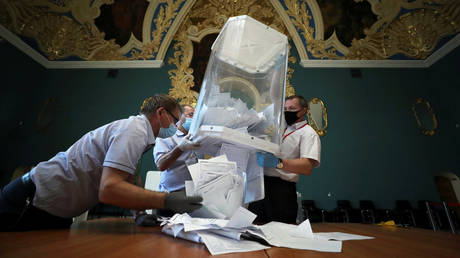
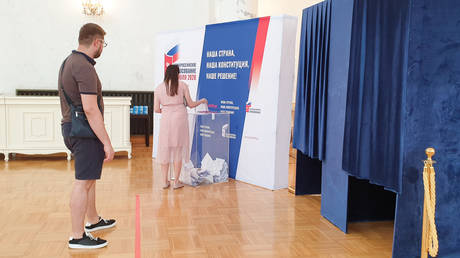
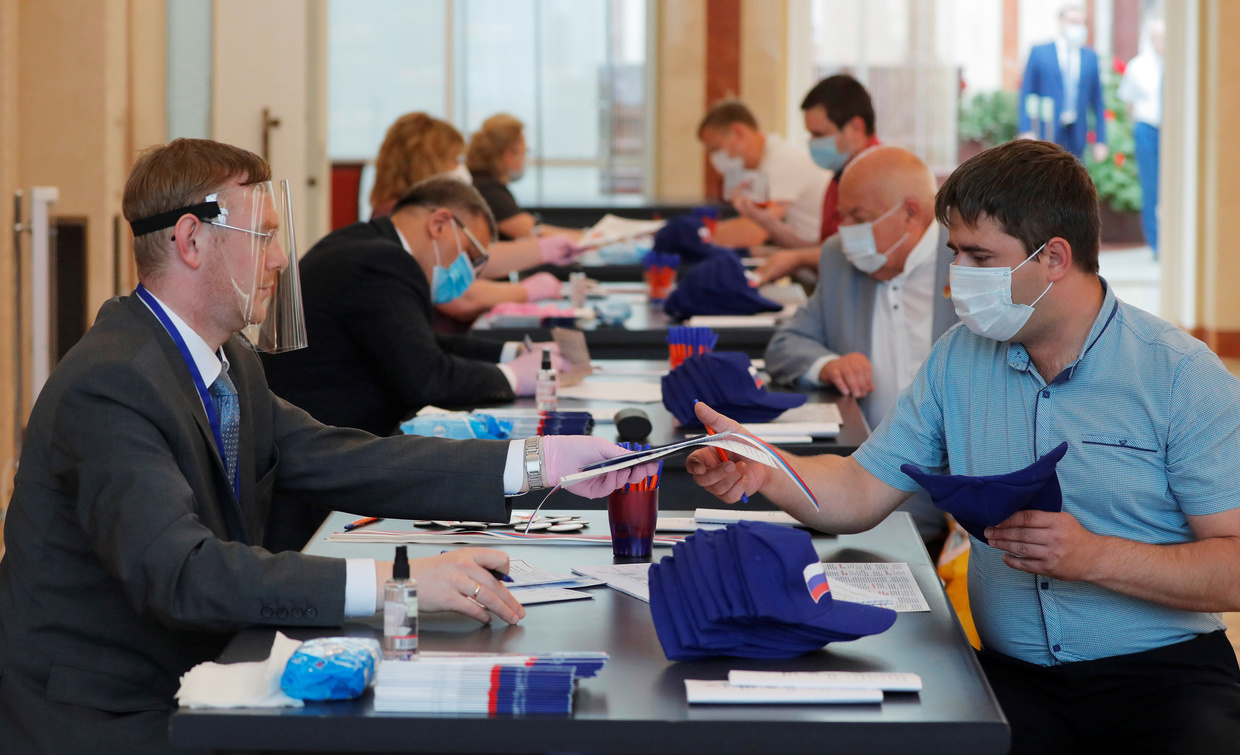
The majority of Russians have endorsed changes to the constitution in a week-long vote. Some 78 percent approved the amendments, while 21 percent were opposed, the Electoral Commission said after all the ballots were counted.
Russians were able to cast their ballots either for or against the 206 proposed amendments from June 25 until July 1. The vote, initially set for April, was delayed due to the Covid-19 outbreak, and the period of voting itself was extended to allow for social distancing. Residents of Moscow, the city hit hardest by the coronavirus, and those in Nizhny Novgorod could also vote online.
However, the final day of voting – Wednesday – still saw millions flocking to the polls all over the country to cast their ballots in person. While there was no threshold set for the turnout, it has been estimated at some 65 percent.
The proposed amendments, the bulk of which are dedicated to social issues, have grabbed headlines in the West mainly because they redefine eligibility for the presidency and could theoretically provide President Vladimir Putin with a chance to stay in power for two more terms.
Other amendments include a state guarantee of a minimum wage above subsistence level; a mandatory adjustment of pensions according to inflation; the definition of marriage as a union between one man and one woman; a ban on top government officials holding foreign passports; and restricting future presidents to serving only two terms. There was some controversy about the new constitution also including a mention of God in relation to the country’s heritage.
The final day of voting largely proceeded incident-free, although several hundred people in Moscow and several dozen in St. Petersburg took to the streets to voice their opposition to the overhaul. The rally in the Russian capital was peaceful, and saw police officers handing out protective masks to the predominantly young activists.
Overall, there were 839 reports of violations during the whole week of voting, including 126 recorded on Wednesday. While investigations have been launched, and already led to results at one of the polling stations in Moscow being annulled, officials say that the reported irregularities are largely minor, and will not affect the final tally.
The bodies of some 113 people have been recovered from the rubble following a landslide near a jade mine in Myanmar, the country’s Fire Service Department has confirmed.
Heavy monsoon rains created a “muddy wave” which trapped workers and scavengers at the site at roughly 8am local time on Thursday in the jade-rich Hpakant area in the northern Kachin state.
“The jade miners were smothered by a wave of mud, which hit after heavy rainfall,” the national fire service said.
https://ift.tt/3igXlPX https://ift.tt/3eSq5ML
Landslides at the poorly regulated mines of Hpakant are common, with some 116 people dying in a similar incident in the area in 2015.
Myanmar is the world’s biggest source of jade, and hundreds of people frequent the exterior of the mines to look for fallen stones and to sift through discarded rubble from mine trucks in search of jade stones. The country’s jade trade is estimated to be worth over $30 billion per year.
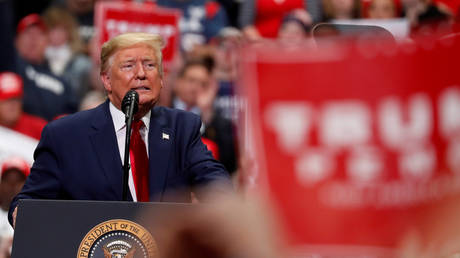
US President Donald Trump’s re-election team has ridiculed the most recent attempt to tie the commander in chief to Nazism after critics compared a campaign T-shirt graphic to a logo commonly used in the Third Reich.
Responding to the allegation that the T-shirt ripped off the emblem of the Nazi Party – spread online by the president’s detractors on Wednesday – Trump’s campaign team dug up photos showing prominent Democratic figures donning similar symbols, asking whether they also had something to hide.
— Trump War Room - Text TRUMP to 88022 (@TrumpWarRoom) July 1, 2020
“This is moronic. In Democrats’ America, Mount Rushmore glorifies white supremacy and the bald eagle with an American flag is a Nazi symbol,” the campaign said in a statement addressing the controversy, adding that Democrats “have lost their minds.”
A number of netizens also shot back that eagle symbolism is found in countless American seals and logos dating back centuries. The bird was first chosen for the US national emblem in 1782 following the War for Independence – slightly predating the Nazis’ rise to power over 150 years later. Even self-avowed opponents of the president noted that the eagle theme is not “uncommon,” pointing to the seal of the US Marine Corps and other military symbols.
Believe me, I sympathize with the sentiment, but this theme is not uncommon. I do think they're fascists but I don't need that t-shirt to conclude that. pic.twitter.com/r4Bk0H0Eka
Guys ... I’ve been calling Trump and his supporters Nazis for years ... but the eagle on the shirt looks more like it was designed from U.S. military insignias. These are Army colonel and Navy captain ... pic.twitter.com/0ePsGZm3ZC
Here is a picture of Trump's new campaign logo. Here are pictures of the U.S. Navy, Marine Corps, and Air Force emblems. The concept of an eagle looking to the side and spreading its wings is not exclusively Nazi. pic.twitter.com/51lqd1I38v
Critics, including a Democratic congressional candidate for Virginia’s 1st District, were not convinced, however, arguing that the eagle’s head always faces rightward in American iconography, while the Nazis – as well as the Trump campaign – had the bird facing to the left (so long as one doesn’t count older versions of the US presidential seal or the Nazi ‘Reichsadler,’ that is).
My brother who was in the US Marines remembered to show me that the USMC Eagle always faces to the Right of the person and the Nazi eagle always faces to the left.
The incident is not the first time the Trump Team has been accused of reviving Nazi imagery. Most recently, the campaign came under fire after running a social media ad featuring a red triangle, which it said was the logo of Antifa – a loosely organized faction of left-wing street protesters. Opponents, however, insisted the symbol was taken directly from the Third Reich, as a nearly identical shape was used to mark political prisoners in concentration camps.
Twitter has taken down a post by US President Donald Trump, in which he used a photo of himself to make a meme. The tweet was yanked shortly after the Times, embroiled in a bitter feud with Trump, filed a copyright claim.
The tweet in question was posted by Trump on Tuesday and featured a photo of him along with words:”In reality they’re not after me, they’re after you. I’m just in the way.”
Trump is no stranger to using photos of himself to make a statement on his social media of choice (cue his Game of Thrones social media phase). This time, however, the US president apparently made a mistake, using a picture snapped by Times’ photographer Damon Winter.
It did not take long for the paper, which has recently escalated its attacks on the Republican leader, to spot Trump's apparent blunder and file a copyright claim, Axios first reported on Wednesday.
Upon removing the post, Twitter confirmed that the company acted upon a copyright complaint from a rights holder. The Times, in turn, acknowledged that they urged the social media giant to take action.
The photo originally illustrated a story on Trump the NYT ran back in 2015.
It’s not the first time Twitter pulled one of Trump’s posts citing copyright violations. Last month, the platform removed a video sporting a mock CNN chyron shared by the president. The video, which saw one toddler running after another, was removed after the children's parents filed copyright claims.
CNN, as well as the Times, have long been embroiled in a very public war with Trump, who has repeatedly labelled them ‘fake news,’ citing in particular the outlets’ regular claims of ‘Russian collusion’ at the height of the Russiagate saga, which has since fizzled out.
With the original Russiagate narrative debunked, the Times is now promoting a sources-based story which originally claimed that Trump was briefed on intelligence alleging that Russia paid bounties to Afgan militants to kill US troops. With US intelligence agencies and the White House denying that Trump ever received such a briefing, the story has shifted several times, and now claims that the intelligence had been included in one of Trump’s written briefs in February, and that the suspected recipients of the bounties were not the Taliban, but rather “criminals” who possibly had links to the militant group. Despite the Pentagon’s denial on Tuesday that it had so far unearthed “no corroborative evidence” to back up the story – as well as rebuttals from both the Taliban’s and Moscow – the Times has stuck to its reporting.
Think your friends would be interested? Share this story!
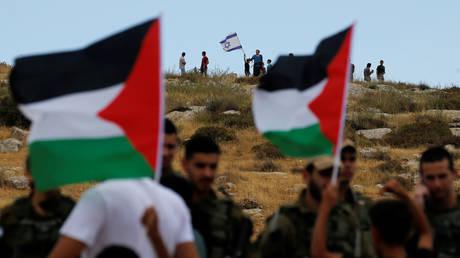
Hundreds of protesters marched through New York City to voice opposition to Israeli annexation plans in the West Bank and the continued occupation of Palestinian territory as Tel Aviv gears up for a major land grab.
A sizable crowd of demonstrators gathered in Brooklyn for Wednesday’s ‘Day of Rage’ rally, where marchers were seen carrying an array of flags and banners while shouting slogans for a “free Palestine.”
The gathering grew throughout the afternoon, according to local reporters on the scene, who estimated that some 2,000 people turned out for the rally. Though there were no reports of clashes with law enforcement, riot police were present, trying and failing at one point to corral protesters to one side of the street.
— NYC Protest Updates 2020 (@protest_nyc) July 1, 2020
A tense moment at the #DayofRage march as police try to force over 2,000 protesters into the right lane at 63rd St. and 5th Ave. in Brooklyn. pic.twitter.com/XF554Oa4Ah
— NYC Protest Updates 2020 (@protest_nyc) July 1, 2020
Dozens of speakers from local organizations addressed the crowd during the march, while members of Neturei Karta, an anti-Zionist Orthodox Jewish organization, were also spotted at the event carrying elaborate signs and placards.
Over 40 speakers from organizations across the city give testimony of their experiences and lead the crowd in chants. pic.twitter.com/MFYOjiyKlX
— NYC Protest Updates 2020 (@protest_nyc) July 1, 2020
Neturei Karta, a group of anti-Zionist Orthodox Jews who believe Israeli statehood goes against Talmudic law and support returning land to Palestinians, are here to support the protest. pic.twitter.com/FcDWeZaeRT
— NYC Protest Updates 2020 (@protest_nyc) July 1, 2020
Reporting from the rally, RT’s Caleb Maupin spoke with a number of participants, who explained their reasons for showing up.
“I’m utterly opposed to Israeli annexation of Palestinian land. They’re living on stolen land, and they’ve been murdering and destroying people,” said one activist. “If you look at the map, you can see the amount of land that Palestinians have been allowed to live on has been decreasing rapidly over the years.”
“If they annex the Jordan Valley, it’s World War 3. Everything is on the table, everything is a go,” another marcher told Maupin. “If you look at what’s going on, Netanyahu is taking Israel and the Arab world into World War 3… after they annex the Jordan Valley, we’re talking about war.”
Similar rallies were also staged in New Mexico and California. Early on Wednesday morning, protesters gathered outside the San Francisco home of House Speaker Nancy Pelosi (D-California) to protest the annexation plan, calling on the lawmaker to join progressive Democrats in opposing the scheme, local media reported.
Happening now in San Francisco: People gathering at SF Civic Center for a car protest in solidarity with Palestine. No to annexation! No to apartheid! Defend Palestine! pic.twitter.com/f9zlAdEabi
— Party for Socialism and Liberation (@pslweb) July 1, 2020
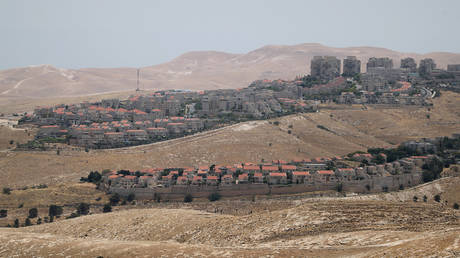
The protests come as Tel Aviv moves ahead on plans to annex all Jewish settlements in the West Bank – including in the strategically important Jordan Valley – many of which were built on Palestinian land in defiance of international law. While the move was initially slated for July 1, on Tuesday Israeli Prime Minister Benjamin Netanyahu suggested the plan would be delayed as talks continue with Washington, which has yet to give formal blessing for the land grab.
The outcome of Russia’s ‘national vote’ on a series of amendments to the constitution serves to reaffirm that most Russians want the country to plow its own furrow, regardless of what outsiders think.
In the end, the margin was huge. Exit polls suggested around 70 percent of voters said ‘yes’ to 206 amendments to their constitution, and close to 30 percent rejected the changes. Official results put the 'yes' vote to above 78 percent, with 99 percent of ballots counted.
Even Moscow liberal political organizers conceded that their own exit polls showed the capital had supported Vladimir Putin’s proposals. What’s more, those tallies revealed how a majority of voters in numerous Moscow districts with opposition-controlled local councils had backed the ‘yes’ side.
One thing forgotten in almost all Western speculation about the process (erroneously labeled a ‘referendum’ by some US/UK media) was that it wasn’t strictly necessary at all. The backing Putin obtained in spring from the Duma (parliament), the Constitutional Court, and all 85 federal subjects sufficed. However, the President decided to stage a ‘confirmatory plebiscite’ to obtain broad public legitimacy for his project. Thus, the vote itself was mostly about establishing whether Putin still has a popular mandate to uphold his domination of Russian politics.
It had been a curious ‘campaign,’ with most prominent opponents of the Kremlin relatively muted. Indeed, the half-inside-the-tent Communist Party was an outlier in being more vocal and forthright than usual, emphatically calling for a ‘no’ vote. Veteran leader Gennady Zyuganov dubbed it “disappointing and depressing.”
Alexei Navalny had labeled the existing Constitution “disgusting” in January, saying it contained “the mechanisms used to usurp power” and telling his supporters "do not defend it.”
That document dated back to 1993, when then-President Boris Yeltsin introduced it – with Western support – to create a “hyper-presidential” system. It came after the Communist-controlled parliament attempted to impeach the pro-Western leader, and he resorted to military force to hold onto power, which led to 187 people killed and 437 wounded.
On Wednesday evening, a protest in downtown Moscow was so poorly attended and halfhearted that police handed out masks to the demonstrators, with Covid-19 in mind. Hardly the rough arm of the state crushing resistance. A handful of dissenters who gathered on Red Square, without permission, were detained and then swiftly released.
In truth, the Kremlin had left the opposition with a thankless task. While they opposed the plan to nullify Putin’s term limits, a lot of popular measures included were difficult to oppose without offending large swaths of voters: for instance, civil servants being prohibited from holding foreign bank accounts and citizenship, a ban on giving away any Russian territory, and a guarantee that the minimum wage will not be lower than the cost of living.
Like it or not, some people were also attracted by the clause banning same-sex marriage and another one saying ethnic Russians are to be recognized as the founders of the state. Another popular change was the provision recognizing the modern Russian Federation as the successor to the USSR and preserving its legacy as the victor in WWII, fueling the sort of militarism many liberals find distasteful.
Another issue is that polls have consistently shown a majority of Russians actually want Putin to remain in power after the 2024 election. Only last summer, Levada (a Western-leaning, pollster independent of the Kremlin) found that 54 percent of Russians would like him to stay on until at least 2030. Only 38 percent wanted him out four years from now.
Western media coverage of the process has been rather bizarre, focusing almost solely on the Putin term-limits issue while ignoring or glossing over the fact that the vast majority of Russians still clearly support his system. Once upon a time, this was attributed to the power of ‘state TV,’ but today, when the internet is beginning to overtake the zombie box as the primary source of news, that unsophisticated trope is clearly redundant.
Russia is not a dictatorship, and Putin is not a dictator. The setup is 'soft' authoritarian and it relies on the consent of the majority to keep power. The provisions in the new constitution - most notably term limits for future presidents and immunity after leaving office - also suggest the president wants to continue with a form of representative government.
The Kremlin is clearly not trying to go down the Chinese or Soviet route, but also doesn’t want to embrace western-style 'liberal democracy.’ Much as Russia itself is both in Europe and Asia but truly ‘of’ neither, its government structure and electoral procedures are also clearly going to remain somewhat unique. After Wednesday’s vote, it’s evidently what most Russians themselves want. At least for the foreseeable future, anyway.
Nevertheless, expect the endless US/UK media headlines predicting Russia's imminent collapse to keep coming. For over twenty years, they have been consistently wrong, and they'll almost certainly be inaccurate for at least twenty more.
Think your friends would be interested? Share this story!





.svg)