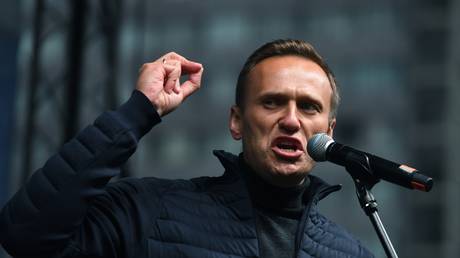
Supporters of jailed opposition figure Alexey Navalny are staging protests in numerous Russian cities on Sunday. One of the first events happened in Vladivostok, where people gathered on the frozen waters of Amur Bay.
Dozens of protesters defied not only the authorities but also local representatives of Navalny’s own team, who said they were endangering themselves by gathering on the ice. Off the coast, the demonstrators walked in circles in a way resembling traditional Russian folk dancing and chanted slogans.
The local rescue service deployed a hovercraft, but according to local media, it malfunctioned. Several people were detained by police before the ice walk. Caught in the crossfire were a few enthusiasts of ice fishing, whose Sunday plans were disrupted by the protest.
In Khabarovsk, there was a small rally in the central city square which lasted for about an hour. Just like the protest in Vladivostok, it was not sanctioned, so the police deployed scores of troops and called for people to disperse. Several people were taken into custody, but otherwise the rally was uneventful.
Somewhat larger protest marches took place in the Siberian cities of Novosibirsk and Irkutsk. In Yakutsk, only a handful of protesters showed up, possibly due to the temperature (around -40C) and heavy snowfall.
The main protest event is expected in Moscow. Last week, a pro-Navalny rally in the Russian capital resulted in clashes with the police and hundreds of people being arrested. The city authorities did not permit the protest this Sunday, citing the Covid-19 pandemic, but supporters of the opposition figure intend to ignore the ban.
Navalny remains in custody pending a court decision regarding his parole case. He was arrested earlier this month after returning to Russia from Germany, where he received medical treatment after an alleged poisoning. Protesters seek to pressure the Russian government into releasing him.
One year after the divorce with the EU, Britain announced plans to join one of the world’s largest free trade agreements. Known as the CPTPP, the deal includes 11 developed and emerging economies around the Pacific Rim.
The British government announced on Sunday its intention to formally apply to become a part of the Comprehensive and Progressive Trans-Pacific Partnership (CPTPP). UK International Trade Secretary Liz Truss will discuss Britain’s intention with ministers in Japan and New Zealand, which are parties to the pact, on Monday, while formal talks are set to start this year.
The trade pact stems from the Trans-Pacific Partnership agreement, talks of which were abandoned by the US. CPTPP members include Australia, Brunei, Canada, Chile, Japan, Malaysia, Mexico, New Zealand, Peru, Singapore, and Vietnam, which together account for about 13 percent the world’s income.
According to the British government, the annual volume of trade between the UK and the members of the group grew by eight percent since 2016 to £111 billion (over $152 billion) in 2020. London says that that domestic manufacturers, including food and drink producers, as well as the automotive industry, will benefit from the deal, but the UK won’t have to cede control of its laws, borders, and money like under EU membership.
“One year after our departure from the EU we are forging new partnerships that will bring enormous economic benefits for the people of Britain,” Prime Minister Boris Johnson said. He noted that the UK will be the first nation to officially apply to join the agreement since it came into force in 2018, which “demonstrates our ambition to do business on the best terms” with partners across the globe.
While the intention was also welcomed by business groups, it still drew criticism. Labour’s trade policy chief, Emily Thornberry, said the UK’s “big decision” on membership in the mammoth agreement comes shortly after the country finally left a trade bloc with our closest neighbors, “only to join another one on the other side of the world with no public debate at all.” She called on the government to open public consultation on the matter, as most people even don’t know what the pact is.
Tunisia has become the third nation in Africa to authorize the Russian-made Sputnik V vaccine for emergency use. The country previously expressed hope that it could get a portion of the vaccines from neighboring Algeria.
The vaccine was approved for emergency use for one year, the Tunisian Health Ministry said in a statement. Tunisia became the third country in Africa to approve Sputnik V in Africa, following its larger neighbor, Algeria, and Guinea.
Kirill Dmitriev, the head of the Russian Direct Investment Fund, which funded the development of Sputnik V, called the news “an important step aimed at prevention of the spread of the coronavirus.”
Tunisia plans to kick off its immunization campaign in the second quarter of 2021. Officials expressed hope that Tunisia could receive a batch of vaccines from Algeria, which started administering Sputnik V on Saturday.
The North African nation previously authorized the use of the Pfizer/BioNTech vaccine and signed a deal with Pfizer to receive 2 million doses, according to Hashemi Louzir, the head of the Pasteur Institute of Tunis.
Health Minister Faouzi Mehdi said earlier this month that starting from April, the country expects to receive 6 million doses of the Pfizer vaccine through the World Health Organization’s distribution program.
To date, over a dozen countries have approved the Sputnik V vaccine, including Argentina, Serbia, Hungary, Iran, and the UAE.
Think your friends would be interested? Share this story!
New Delhi has allowed cinemas and theaters all over the country, except for Covid-19 containment zones, to increase seating from 50 percent to full capacity in a move welcomed by the battered movie industry.
The new guidelines, released by India’s Ministry of Information and Broadcasting on Saturday, pertain to “cinemas, theaters and multiplexes,” allowing them to operate at full capacity from Monday provided they abide by a set of rules aimed at preventing the spread of the disease.
These include physical distancing of “at least 6 feet” outside of cinema halls, common areas or waiting rooms. Visitors and staff must wear face coverings or masks “at all times,” as well as following basic hygiene rules such as covering their mouths and noses when sneezing or coughing and avoid spitting.
Theaters must continue to follow the precautionary measures already in place, such as having sanitizers readily available to guests, preventing overcrowding, and ensuring the auditoriums are sufficiently ventilated.
The newly-released regulations also roll back restrictions that ravaged Bollywood, with the spate of suicides of actors over the past year sending shockwaves across the nation.
Movie production resumed in the fall with stringent social-distancing rules in place, but although they were allowed to reopen in October, cinemas and theaters had to operate at 50-percent capacity.
Industry professionals rejoiced over the development. The Producers Guild of India described the move as “an important step” in Bollywood’s “recovery” from the coronavirus-induced downfall.
Film exhibitor Vishek Chauhan celebrated the news as “another step towards normalcy.”
“We were down… We saw our obituaries written,” he said, apparently referring to the series of tragic deaths in Bollywood amid the pandemic.
BIGGG NEWS... 100% seating capacity allowed in cinemas/theatres/multiplexes!!
Good news. Back to 100% capacity for cinemas soon. Contrary to perception, I don't believe the theatrical medium will ever pass away in #India. Time for OTT and cinemas to co-exist peacefully.
While New Delhi formally removed the seating cap, it left it to the states to decide whether they are ready to ease the restrictions, noting that “states/union territories may consider proposing additional measures as per their field assessment.”
Think your friends would be interested? Share this story!
The access to Dodger Stadium in Los Angeles, California, touted as the nation’s largest mass vaccination site, was halted for an hour after a small group of protesters showed up to decry the immunization drive.
The entrance to the stadium, which has been serving as the mass vaccination site since mid-January, was sealed at around 2 p.m local time after a sparse crowd of protesters staged a rally near the gate.
Footage on social media showed several dozen protesters turning up with signs that read “Covid is a Scam,”“End the Lockdown,” “99 percent survival rate” and “No Vaccine” among others.
a Picture from todays anti-vax protest at Dodger Stadium..... sometimes the jokes write themselves..... pic.twitter.com/7kbXMHeCZF
The Los Angeles Times reported that the decision to block the motorists from driving inside the gate came from the Los Angeles Fire Department, and was deemed a “precaution.”
The site was off limits to those willing to get a Covid-19 jab for about an hour. It was not immediately clear why the stadium was temporarily closed, with author Mikel Jollett tweeting that “only about 30 protestors total” took part in the demonstration.
Footage posted by local reporter Emily Holshouser shows police officers securing the gate, and preventing anyone from getting inside. In the video, a man confronts an officer at the gate as to why police cannot let anybody in. The officer does not elaborate, saying only that he is acting on orders. “Right now it’s closed. You are not going to get through anybody right now. Just wait in your car, that’s the best you can do right now,” he says.
Someone waiting to get vaccinated speaks to an LAPD officer who says no one can get through, asks him to wait in his car. Says getting vaccinated is the right thing to do. pic.twitter.com/l387z0ALXp
While some commentators on social media placed blame on police for hindering the immunization campaign, LAPD denied it has anything to do with the site’s closure.
“The LAPD did NOT close the gates, and per LA City Fire, all scheduled vaccines will be delivered,” police said in a statement, adding that the protesters “remained peaceful.”
LAPD police chief Michel Moore noted that the officers were working with “public safety partners” to ensure everyone who is scheduled to get the jab won’t leave without being administered one.
In the series of tweets that followed, Moor repeatedly argued that the protest did not trigger the site’s closure.
“The protest did NOT shut down the vaccination site. ALL appointments are being met,” he stated.
The protest did NOT shut down the vaccination site. ALL appointments are being met. https://t.co/b8wNwoscX8
Before being repurposed into the mass vaccination site, the stadium served as a mobile testing site. Earlier this month Los Angeles Mayor Eric Garcetti estimated that up to 12,000 people can be vaccinated there a day.
Think your friends would be interested? Share this story!
Robinhood co-founders channeled the maximum sum allowed to the campaigns of the chiefs of the House Committee on Financial Services last year, it has been revealed. The panel is poised to investigate the GameStop craze.
Federal records, dug up by the media in light of the continuing massacre of hedge funds by retail investors using trading apps like Robinhood and Webull, has showed that Robinhood CEO Vlad Tenev and the app co-founder Baiju Bhatt contributed $2,800 each to the campaigns of Maxine Waters (D-CA), Chairwoman of the House Committee on Financial Services, and top Republican on the committee, Patrick McHenry (R-NC), last October.
Under the federal law, $2,800 is the maximum allowed amount an individual donor can contribute to a candidate’s committee in the current election cycle.
Apart from this, both Tenev and Bhatt funneled $1,200 each to Innovation Political Action Committee, linked to McHenry, and to People Helping People, which, in turn, is associated with Waters. Tenev and Bhatt also donated $2,800 to WINRED, an online fundraising platform, endorsed by the Republican National Committee.
Sorry to any Robert McHenrys, this should be Patrick McHenry. Thx to @ff_ff8008ff_ff for the correction.
Not only did Vladimir Tenev & Baiju Bhatt make exactly the same political contributions, these are their *only* political contributions.https://t.co/GE8gXu4oBc
All of the contributions were made in the span of several days in October and appear to be the only political activity from the Robinhood execs to have ever left a footprint in the federal records.
The scoop was first reported by Mediaite and the Intercept’s Jon Schwarz on Saturday, two days after Waters announced the committee will hold a hearing “on short selling” and “online trading platforms” in view of the Gamestock and other heavily shorted stocks trading bonanza.
Reached by Mediate, spokesperson for Waters did not provide additional comment on what some critics deem a potential conflict of interest, citing her only statement on the issue instead.
Spokesman for McHenry dismissed the notion that the lawmaker could be biased in favor of the trading app, saying: “Rep. McHenry’s official actions have nothing to do with his political activities.”
In a statement on Thursday, Waters said that the focus of the hearing, the date for which has not been set yet, will be “the recent activity around GameStop (GME) stock and other impacted stocks with a focus on short selling, online trading platforms, gamification and their systemic impact” on the markets
Waters did not mention any trading platforms or hedge funds by the name. However, Robinhood traders, congregating on such platforms as Reddits’ WallStreetBets community, are seen as the main “culprits” behind the soaring stock prices of the companies like GameStop, BlackBerry and AMC Theatres, otherwise generally considered to be on the verge of demise.
Robinhood caught a lot of flack after the online brokerage severely restricted investors’ ability to speculate, imposing one share limit on a whopping 50 stocks, including that of GameStop and other “stonks" on Friday.
In addition to the barrage of criticism, the company also drew calls to investigate it for market manipulation, after it shut down trading in GameStop ($GME), BlackBerry ($BB), and AMC ($AMC) shares earlier this week, before coming up with a one-share limit.
Facing backlash from retail investors, Tenev insisted that he did so to abide by “regulatory requirements” on volatility, and maintained that his company’s connection with the firm Citadel Securities and related hedge fund Citadel LLC has nothing to do with the move. Citadel, which bailed out Melvin Capital after it suffered major losses in the GameStop debacle, also denied any link to the halt in trading.
Think your friends would be interested? Share this story!
Former UK Secretary of State for Northern Island, Julian Smith has accused the European Union of committing “an almost Trumpian act” after it made an effort to stop vaccines from entering the UK at the Northern Irish border.
By deciding to trigger Article 16 of the Northern Ireland Protocol on Friday, the EU attempted to stop vaccines moving from the Union to the UK – which, unlike the EU, has enjoyed a speedy inoculation rollout – through the perceived backdoor of Northern Ireland.
The EU reversed its plan after it was condemned by many high-profile politicians, including UK Prime Minister Boris Johnson and Northern Ireland First Minister Arlene Foster, who called it “an incredible act of hostility.”
Smith, who served as secretary of state for Northern Ireland between 2019 and 2020, also tore into the EU’s decision during an appearance on BBC Radio 4’s ‘Today’ show on Saturday. “Years have been spent trying to ensure goods will flow freely and there will be no hard border,” he said.
The EU pulled the emergency cord without following any of the process that are in the protocol if one side wants to suspend it.
“And they did that, in my view, without anywhere near the understanding of the Good Friday Agreement, of the sensitivity of the situation in Northern Ireland, and it was an almost Trumpian act,” Smith continued, in reference to the controversial former US President Donald Trump, who was often accused by critics of being destructively tone-deaf.
“It is not just a backdoor for goods going to Britain, it is a very sensitive place, and we have a duty of care between the EU and the UK to preserve no hard border and stability in Northern Ireland,” Smith explained.
Prime Minister of Ireland Micheal Martin celebrated the reversal of the EU’s actions late on Friday, calling it a “welcome decision” and “a positive development given the many challenges we face in tackling COVID-19.”
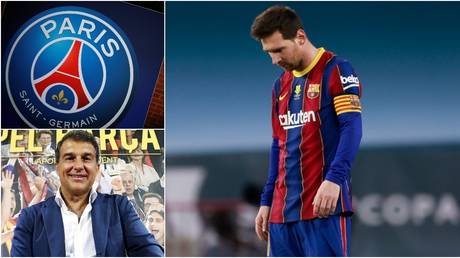
Barcelona presidential hopeful Joan Laporta has reiterated his suspicions of PSG as they eye a move for Lionel Messi, accusing the French giants of a "lack of experience" and a potential breach of financial rules to seal the deal.
Laporta, who oversaw two Champions League titles during his previous premiership at Barca between 2003 and 2010, has accepted that the likes of Messi will "always" be targeted by the mega-rich French giants but warned that now was no time to "think" or "dream" about a potential switch.
Iconic striker Messi would almost certainly become the world's highest-paid player were he to move to Paris, and was even rumored to have been taking French lessons earlier this week.
“I don't know if they can sign him," Laporta told L'Equipe, speaking as his bid to become president at the Camp Nou again in March continues.
Barcelona presidential candidate Joan Laporta hits out at PSG for their "disrespectful" pursuit of Messi. pic.twitter.com/0etMhRf979
Di Maria (PSG): "I always had the illusion of playing with Messi in a team, having him every day. Every time we go to the national team, it was too short. I had the chance to play with Cristiano Ronaldo, Neymar, Mbappé. Playing with Leo... I could safely retire." pic.twitter.com/8CJwgxK1k7
🗣 Mauricio Pochettino (PSG coach) "Would I like to see Messi join PSG? Whatever I say will be misunderstood, and I love what I have. Great footballers fit in any league and any team." [marca]
"Maybe yes if they continue to break Financial Fair Play [FFP] rules… from what I know, they had significant losses last year. I would be curious to know if they will ignore the rules of FFP to recruit him.
“If that happens, I hope that UEFA and FIFA will react firmly and that the Court of Arbitration for Sport will not hold back when it comes to delivering its verdict.
"I find it inappropriate. It shows their lack of experience at this level. They still have a lot to learn in the world of football."
PSG are bankrolled by Qatar Sports Investments and have been known for the lavish outlays that have taken them to the brink of winning the Champions League, including spening around $263 million to buy Neymar from Barca in 2017, who is expected to earn around $350 million across his five-year contract.
The club won an appeal against a UEFA investigation into an alleged FFP breach in 2019, when the Court of Arbitration for Sport sided with them.
New Paris manager Mauricio Pochettino said he would be "misunderstood" over anything he said about potentially adding Messi to his squad.
"I respect players who belong to other teams, because [the teams] can get angry and I understand why," he told Marca.
“We understand that in the world of football there are no saints; nobody can complain that each club does its best to improve the team."
India’s economy, which was severely hit by the coronavirus lockdowns, is expected to see a strong recovery as soon as the 2021-22 fiscal year, according to the latest report penned by the country’s chief economic adviser.
The report presented to Parliament on Friday projects the country’s real GDP to reach record growth of 11 percent from April 2021 through March 2022. It also forecasts nominal GDP to grow by 15.4 percent, the highest since independence.
However, economists still see a contraction of 7.7 percent for the full fiscal year, with a V-shaped recovery in the next. The Indian economy, which has been battered by the coronavirus pandemic, shrank an unprecedented 23.9 percent in April-June.
India will reportedly reap the ‘lockdown dividend’ from the well-timed preventive measures New Delhi adopted at the outbreak of the pandemic. Moreover, stable macroeconomic conditions are bolstered by a strong national currency, blooming foreign exchange reserves that climbed to a new high of $586.08 billion as of January 8, and positive signs in the manufacturing sector output.
“The scores of lives that have been saved and the V-shaped economic recovery that is being witnessed – due to the causal impact of initial lockdown – bear testimony to India’s boldness in taking short-term pain for long-term gain,” the survey reads.
Fiscal and monetary support provided by the Reserve Bank of India (RBI) also helped in the recovery, according to the report.
Net exports turned positive in the first half of the year with a larger contraction in imports of 29.1 percent compared to a contraction in exports of 10.7 percent. With the gradual recovery of economic activity, both imports and exports have picked up and net exports are expected to re-enter negative territory in the second half.
Economists expect the agricultural sector to cushion the pressure from the Covid-19 pandemic on the economy with growth of 3.4 percent. The share of the sector in overall GDP will reportedly increase to 19.9 percent from 17.8 percent, fixed in 2019-20 fiscal year.
Meanwhile, mining is forecasted to shrink by 12.4 percent, manufacturing – by 9.4 percent, construction – by 12.6 percent. Within the service sector, trade, hotels, transport and communication are estimated to contract by 21.4 percent.